

It can be tough to stick to any diet plan during the holidays. Different work schedules and social obligations can throw normal routines into disarray. Plus, it鈥檚 the only time of year to enjoy certain beloved food and drinks 鈥� who wants to forgo stuffing and eggnog because they鈥檙e on a low-carb diet? But there are other ways to keep calories in check that don鈥檛 require eliminating any foods.

Yikyung Park, ScD, WashU Medicine nutritional epidemiologist at Siteman Cancer Center
鈥淭ime-restricted eating, or TRE, is an eating pattern that involves consuming all daily calories within a specific time window, typically between 6 and 10 hours, and fasting for the remaining hours of the day,鈥� said Yikyung Park, ScD, WashU Medicine nutritional epidemiologist at Siteman Cancer Center. 鈥淭his approach has gained popularity due to its potential health benefits, which have been supported by various studies.鈥�
Also called intermittent fasting, eating only during a specific time frame has led to successful weight loss for many people 鈥� but not because it matters what that exact time frame is. If you鈥檙e a breakfast person, you might want to set your eating hours between 8 a.m. and 6 p.m. If you鈥檙e not typically hungry in the morning, noon to 10 p.m. might make more sense. 鈥淏y restricting the eating window, individuals often consume fewer calories, which can lead to weight loss. Additionally, TRE may improve metabolic rate and fat-burning processes,鈥� Park said. Our bodies may even be primed to only eat within certain hours because the method complements the body鈥檚 natural circadian rhythms, which can result in better sleep and more efficient energy use, Park said.
Studies tracking people on time-restricted eating plans have revealed even greater potential health benefits, such as reduced inflammation and blood sugar levels, improved gut health and sharper cognitive function. Besides the day-to-day advantages, TRE might even have longer-term effects. 鈥淎nimal studies have indicated that intermittent fasting, including TRE, can extend lifespan,鈥� Park said. 鈥淲hile more research is needed in humans, these findings are promising and suggest that TRE could potentially contribute to increased longevity.鈥�
Eating during certain hours is a straightforward, approachable way to be more cognizant of calorie consumption. But not all plans are ideal for all people, and Park urges caution before jumping in. 鈥淲hile TRE has several potential benefits, it is important to approach it mindfully and consider individual needs and medical conditions. Consulting with a health care provider before making significant dietary changes is always recommended.鈥�
罢颈尘别-谤别蝉迟谤颈肠迟别诲听别补迟颈苍驳听尘别迟丑辞诲蝉
Alternate-day fasting:聽Here, fasting doesn鈥檛 mean forgoing food altogether 鈥� it鈥檚 dropping your regular calories down to just 25% of your typical intake every other day, and on alternate days, eating about 25% more calories. This approach requires more discipline and can bring negative side effects: Some studies showed people had much higher levels of bad cholesterol even six months after ending the diet (although reasons why are unclear), and other people lost just as much weight by simply cutting about 25% of their calories every day, no lengthy spans of fasting required.
5:2 approach:聽The 5:2 approach refers to days of the week: five days eating your regular number of calories and two days eating far fewer calories (about 500 total). One advantage to this method is that you only need to restrict eating for two days, and then it鈥檚 fine to eat normally on the other five. On low-calorie-consumption days, aim for two meals of 200 to 300 calories apiece 鈥� and choose foods that are filling but low calorie, such as high-fiber vegetables and lean proteins.
贰补迟-蝉迟辞辫-别补迟:听Using the eat-stop-eat method, adherents fast for 24 hours once or twice a week, then 鈥渇ree eat鈥� on the other days. This approach to calorie cutting is more intense. Besides hunger 鈥� which can lead to bingeing and even weight gain 鈥� people often experience tiredness, irritability and headaches, and it isn鈥檛 recommended for children, people who are malnourished, pregnant, nursing or have a chronic disease such as diabetes.
16/8 (or 14/10) method:聽This popular method of intermittent fasting involves eating for an 8-hour (or 10-hour) window during the day, then abstaining for the other 16 (or 14). Some adherents find it easier to eat between 10 a.m. and 6 p.m., and others widen the window a little more and eat between 9 a.m. and 7 p.m. It doesn鈥檛 matter what time you eat: The idea is, only eating during a certain time frame curbs grazing, which leads to fewer calories consumed overall. However, this method doesn鈥檛 mean you can eat anything at all during these 8 or 10 hours. To lose weight, it鈥檚 only effective if you stick to a calorie goal 鈥� typically 2,000 calories for women and 2,500 calories for men 鈥� over a 24-hour period.

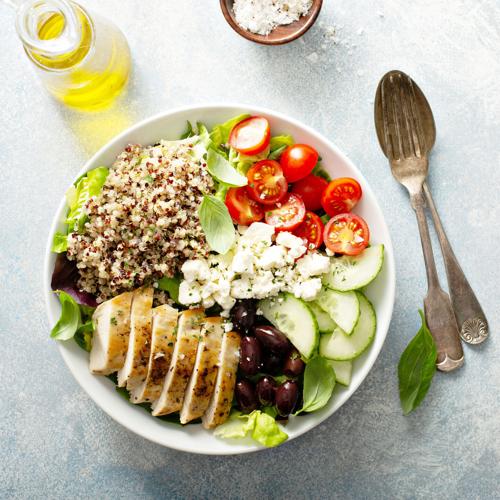
Mediterranean Chicken and Quinoa Salad
滨苍听Good Taste is brought to you in partnership with聽. Watch for more healthy, seasonal cooking ideas each month.