




JEFFERSON CITY聽鈥� A proposed ballot initiative asking voters to make it harder for lawmakers to overturn citizen-approved changes to the state constitution聽is in the hands of the Missouri Supreme Court.
During arguments before the seven-judge panel Wednesday, attorneys for the Respect Missouri Voters coalition urged the court to overturn an August decision by Cole County聽Circuit Judge Daniel Green聽blocking voters' opportunity in November to protect the citizen-led ballot initiative process from ongoing attacks by the Republican-led General Assembly.
The coalition gathered 367,000 signatures to place the question on the statewide ballot, but Green sided with Republican Secretary of State Denny Hoskins and national Republican Party groups, saying the proposal violates the state Constitution鈥檚 ban on allowing referenda from having multiple subjects.
People are also reading…
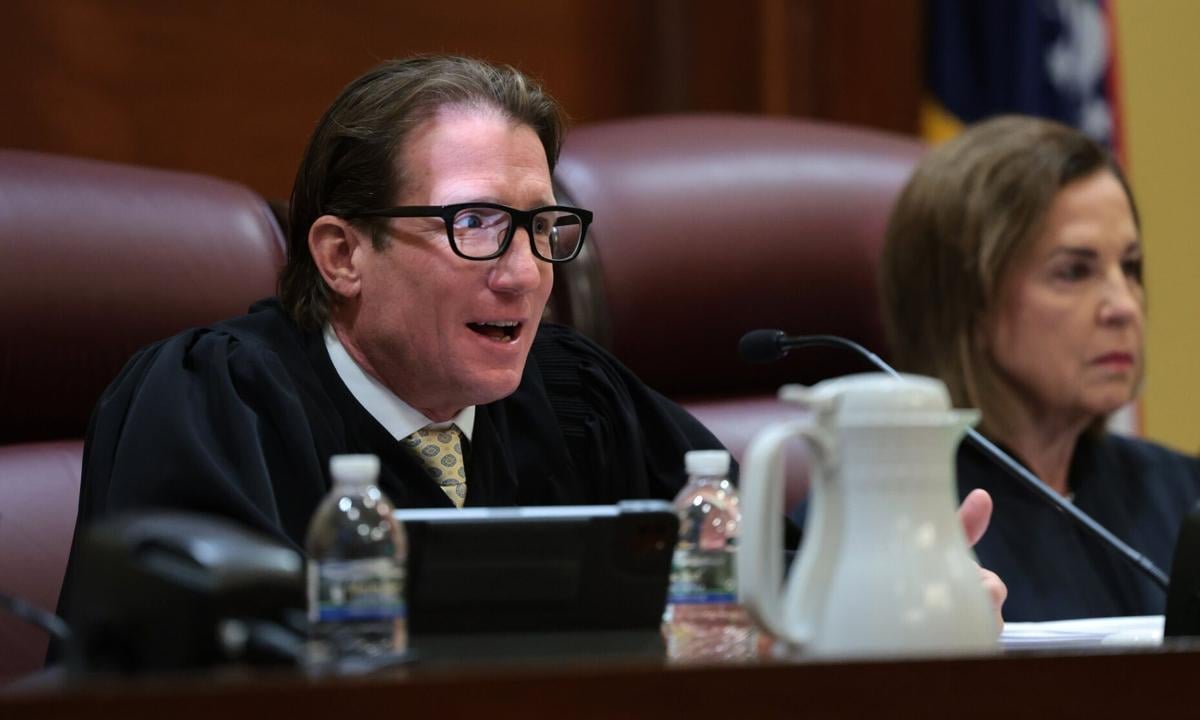
Supreme Court Chief Justice Brent Powell questioned whether Hoskins and the GOP organizations could say the proposal is unconstitutional because it is not yet a law.
鈥淒on鈥檛 we have to wait to take up these challenges?鈥� Powell asked.
Attorney Chuck Hatfield of the Respect Missouri Voters group said Hoskins does not have the power to declare a ballot question constitutional.
鈥淗e鈥檚 not a judge. He has no constitutional role,鈥� Hatfield said.
The court Wednesday also heard testimony in a lawsuit over a proposed referendum asking voters to reject Missouri's redrawn congressional district boundaries approved by the GOP-controlled General Assembly last year. The secretary of state rejected that initiative, too, arguing it was unconstitutional, saying voters are not allowed to weigh in on redistricting approved by state lawmakers.
Both lawsuits are on a judicial fast track because no court may add a measure to the Nov. 3 ballot after Sept. 8, which is eight weeks before election day.
The Respect Missouri Voters coalition sued Hoskins after he refused to聽certify their petition聽for a proposed constitutional amendment on the Nov. 3 ballot that would limit legislative changes to voter-approved laws or constitutional amendments.
Under the proposal, attempts to weaken or strike laws approved by voters would have to receive support from 80% of lawmakers and then be approved by voters statewide.
Hoskins argued the proposed question would upend the balance between what lawmakers are allowed to do and what citizens are allowed to do when it comes to making laws.
Green, the circuit judge, agreed, saying the proposal includes 鈥渦nrelated and conflicting provisions鈥� including one that would bar lawmakers from passing laws that overturn ballot initiatives dating to 2010.
鈥淚t is a fundamental principle of republican government that a current legislature cannot bar a future legislature from legislating on a particular subject,鈥� the judge said.
In pre-trial briefs, Deputy Solicitor General Kathleen Hunker wrote that the proposal contains subjects that are unrelated to the main purpose of the initiative, including real estate taxes, campaign contributions and marijuana.
鈥淭his is precisely the kind of logrolling that the single-subject guarantee is intended to protect 鈥� prohibiting initiative proponents from wrapping unpopular subjects into a bill to obtain a majority vote,鈥� Hunker wrote.
Hatfield, in pre-trial briefs, dismissed claims that the ballot question would violate the state鈥檚 single-subject rule for laws and initiative petitions.
鈥淓very provision relates to one controlling purpose: protecting citizen law-making power,鈥� Hatfield wrote, adding, 鈥�(I)t is constitutionally permissible for a proposed amendment to have 鈥榚ffects鈥� on other articles, so long as the proposal remains committed to a single, identifiable purpose.鈥�
The move to protect the initiative petition process is in response to the GOP-controlled House and Senate pushing back against citizen initiatives that are seen as progressive, including聽Medicaid expansion,听marijuana legalization聽and a聽repeal of the state's abortion ban. Legislators have sought to overturn several approved by voters, including聽repealing paid leave requirements聽and placing their own amendment聽seeking to re-ban abortion聽on the ballot this November.
The lawsuit comes against the backdrop of an overwhelming defeat in the Aug. 4 primary election of a proposed constitutional amendment backed by Republican lawmakers known as Amendment 4. It would have would have required citizen-led constitutional amendments to win a majority statewide and a majority in each of Missouri鈥檚 eight congressional districts. The measure was soundly rejected by more than 80% of voters throughout the state.