




Ridley Scott, 88, has churned out eight feature films in the last 11 years; the apocalyptic drama 鈥淭he Dog Stars鈥� is his latest. Some of these films are masterpieces (鈥淭he Martian,鈥� 鈥淭he Last Duel鈥�), some are close to perfect (鈥淣apoleon鈥�), others prove he still has the juice that made him an icon (鈥淎lien: Covenant,鈥� 鈥淕ladiator II鈥�) and some are strange little ditties that feature elements of brilliance and savagery (鈥淗ouse of Gucci,鈥� 鈥淎ll the Money in the World鈥�).
鈥淭he Dog Stars鈥� isn鈥檛 quite any of those things. For an apocalypse film, it鈥檚 more sweetly sentimental than bleak; there鈥檚 a softness to it that hasn鈥檛 been seen in a Scott movie in a while. That鈥檚 due in large part to star Jacob Elordi, a gentle giant, in his element as an earthy, silent hero, akin to his recent turns in 鈥淔rankenstein鈥� and 鈥淲uthering Heights.鈥�
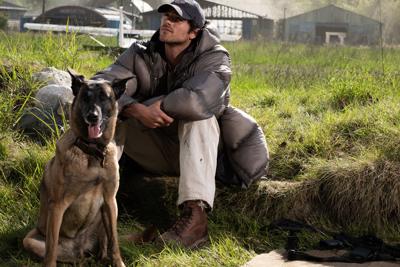
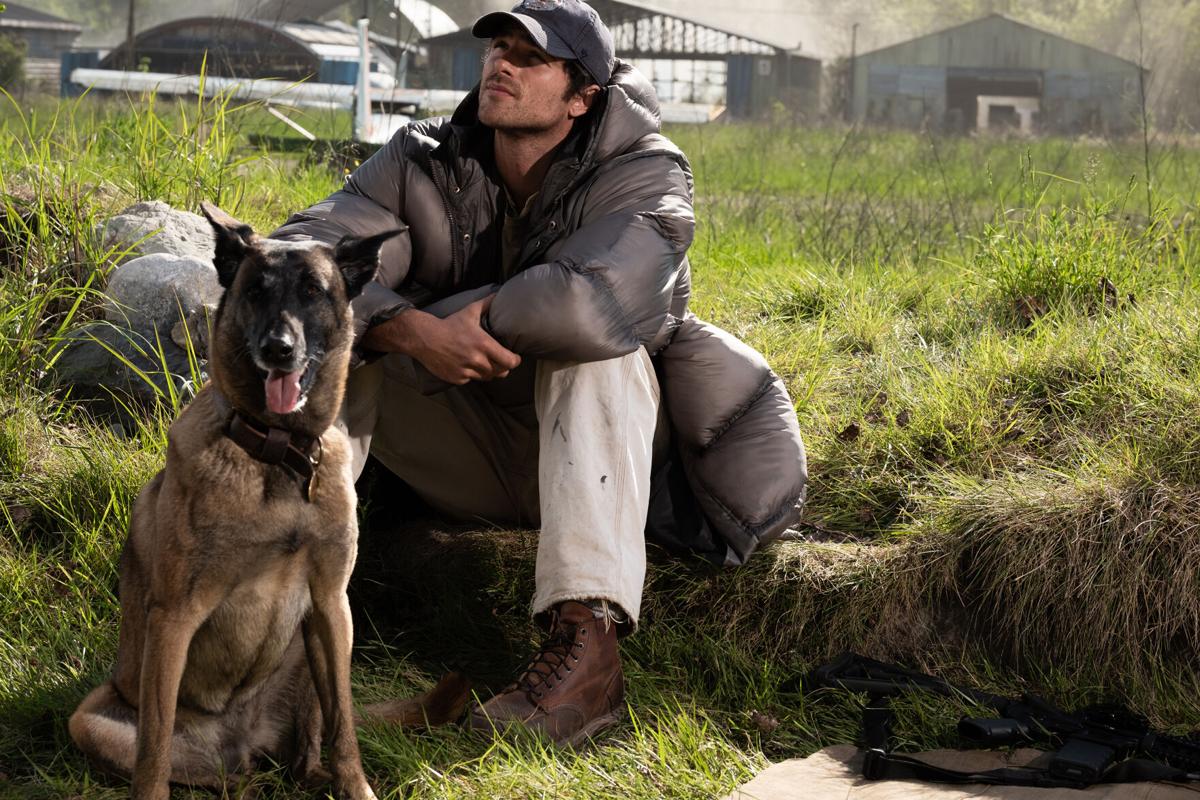
Elordi plays a man called Hig, whose softness is enhanced by his relationship with his dog, Jasper, a constant companion on his rural property, littered with small airplanes and farm equipment. It鈥檚 not until Hig takes to the skies in his yellow Cessna, flying over the blighted cityscape of Denver, that it pulls into focus. Things seem bucolic on Hig鈥檚 land; not so much elsewhere, where stray animals roam an abandoned and overgrown city, municipal buildings littered with the remnants of temporary hospitals.
People are also reading…
鈥淭he Dog Stars鈥� is adapted from the 2012 novel by Peter Heller, depicting life after an influenza pandemic has wiped out most of humanity. Screenwriter Mark L. Smith amps up the action for the screenplay, and the film ping-pongs between the post-apocalyptic need for survival and desire for human connection, which are often at odds with each other.
These differing goals are represented by Hig, who spends his time collecting and distributing supplies, particularly to a small Mennonite community, and his partner Bangley (Josh Brolin), a former Marine who is content to defend his perimeter, sniping anyone who crosses onto their land.
When the last connection to his previous life is gone, Hig starts thinking about venturing further, beckoned by a crackly radio call from Grand Junction. His journey brings him to a ranch inhabited by Pops (Guy Pearce) and his daughter Cima (Margaret Qualley), who also embody the warring duality of post-apocalyptic life. Pops is a defensive, protective rancher; his daughter, a widowed medical student, is drawn to this new person, Hig, himself a widower. Both are grieving and find solace in sharing that.
There are, of course, other modalities of post-apocalyptic existence that aren鈥檛 just a quiet rural life. There鈥檚 the pack of feral skinheads sporting tribal markings, a gang of ponytailed bandits on horseback, and whatever鈥檚 going on in Grand Junction (nothing good, despite Hig鈥檚 hopes). These flashes of violence are where Scott鈥檚 filmmaking shines, but Smith鈥檚 screenplay falters.
One of the most visually exciting scenes is a skinhead attack on Bangley, who鈥檚 been lying in wait. Seen through his smeary, green night-vision goggles, Scott is having some fun with this action sequence, and it鈥檚 an artful scene of violent chaos. This is followed up with an ambush on the ranch by the Native-coded bandits, which is fun to watch but completely unmoored from characterization or motivation. What do they want? The resources? The plane? Are they just bloodthirsty?
The violence makes no sense, and while that works for the gang of wild boys, it doesn鈥檛 for this more organized group. Similarly, Hig, Pops and Cima鈥檚 sojourn to Grand Junction yields a scene of deeply creepy yet underwritten villainy, only suggesting at the evils unfolding there. Viscerally effective? Yes. Coherent? No.
Like its characters, 鈥淭he Dog Stars鈥� is a film that bounces between two poles: it wants to be an action-packed apocalypse film, filled with strange, upsetting imagery, but it also wants to be an earnest love story under the stars, soundtracked to Hozier. The film doesn鈥檛 manage to reconcile its tones.
Still, Elordi proves to be a grounding force with his taciturn performance. His silent anguish is palpable, as a man searching for something to tether him to a world gone mad. The best moments are in his grief, wandering through memories, learning to live in the present, not the past. He keeps us tethered to 鈥淭he Dog Stars,鈥� an odd curio in Scott鈥檚 oeuvre, though it bears its own interesting moments nonetheless.